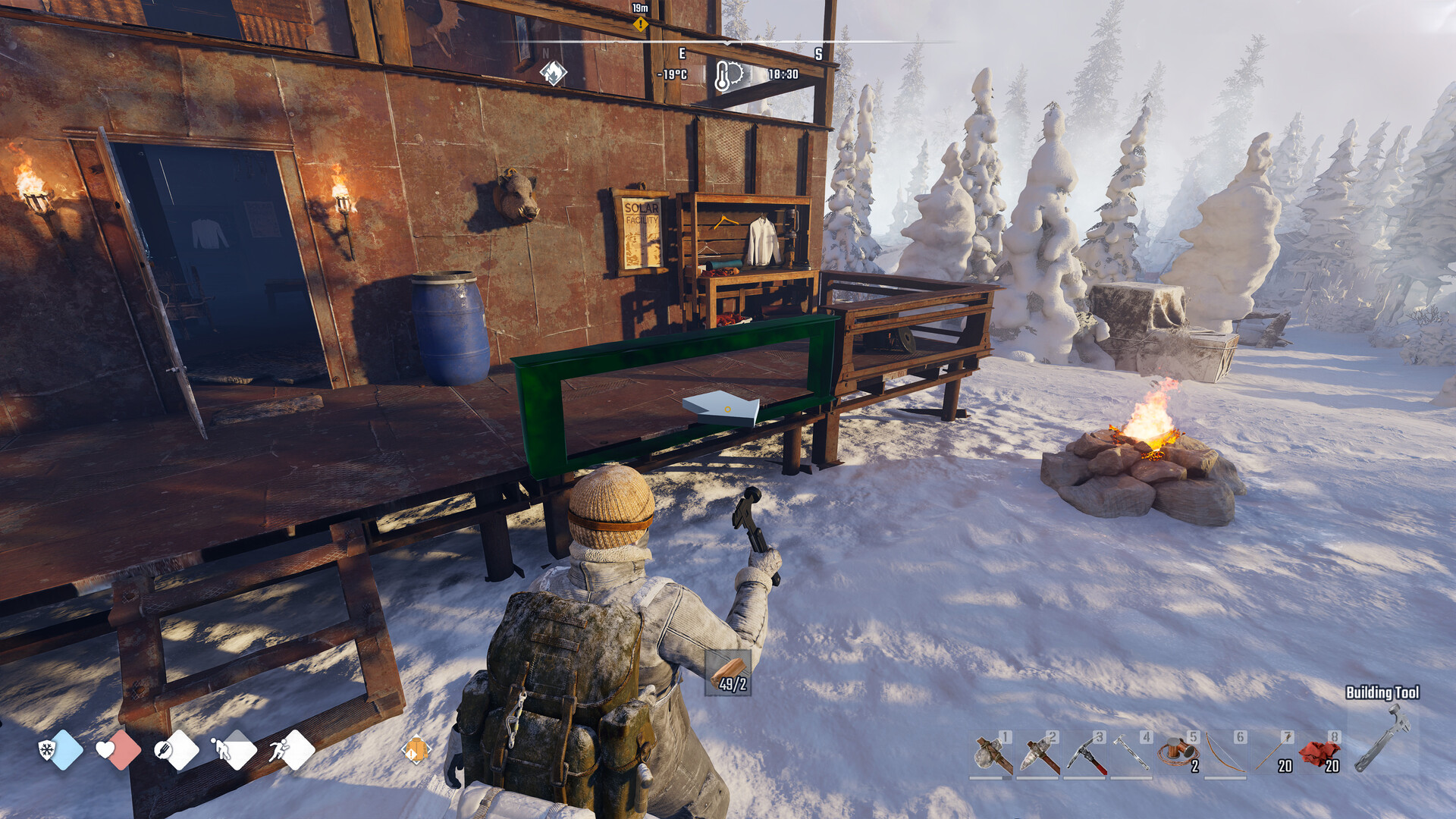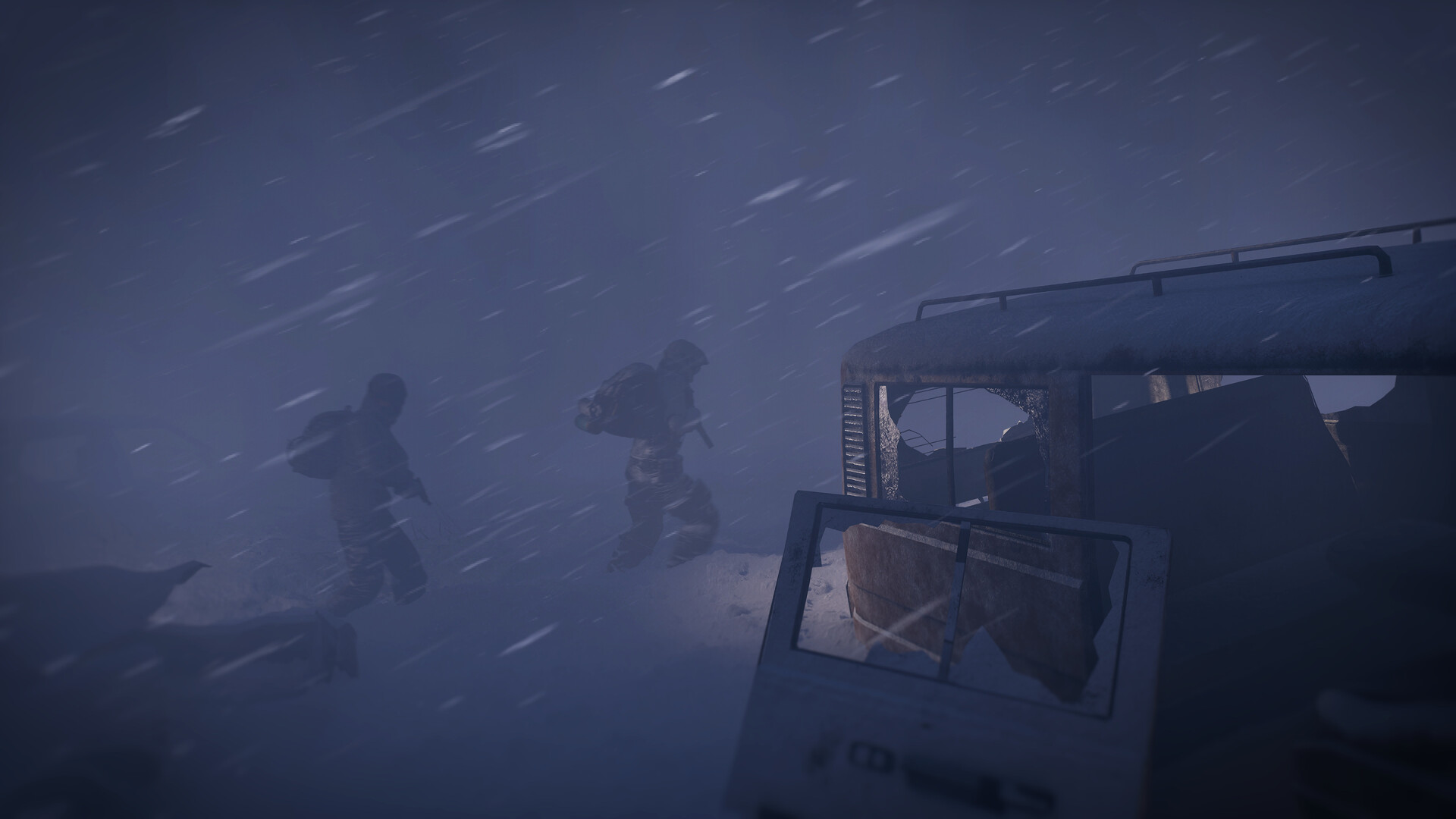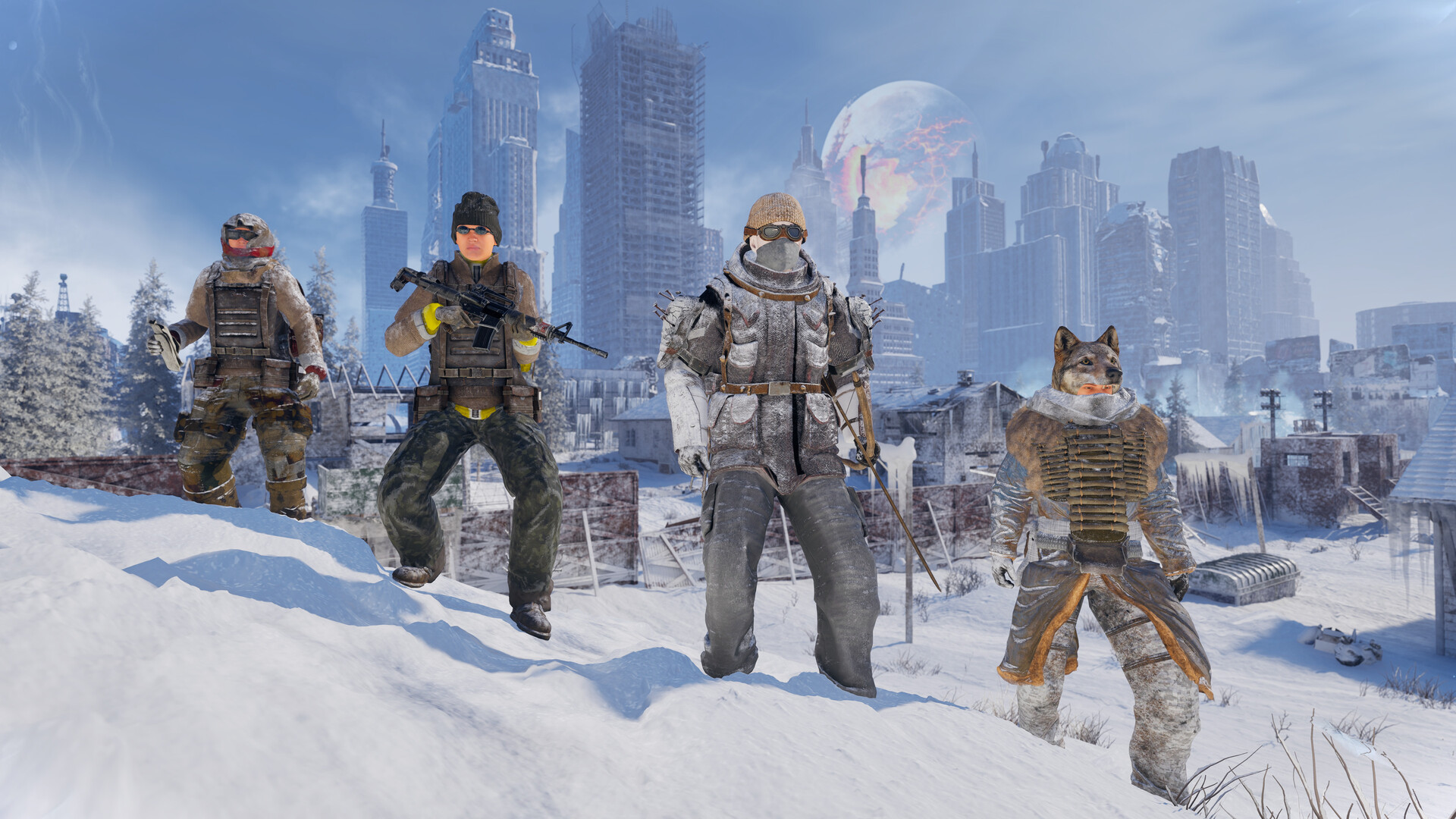
Permafrost gameplay is a third-person open-world survival loop where the cold is the main enemy. You scavenge, craft tools and clothing, light fires and restore shelters so you can push into colder areas with better loot. Story quests and repaired machines unlock progress, while a dog companion scouts and carries supplies. You can play solo or with up to three friends in online co-op, on Story, Survival or Custom settings.
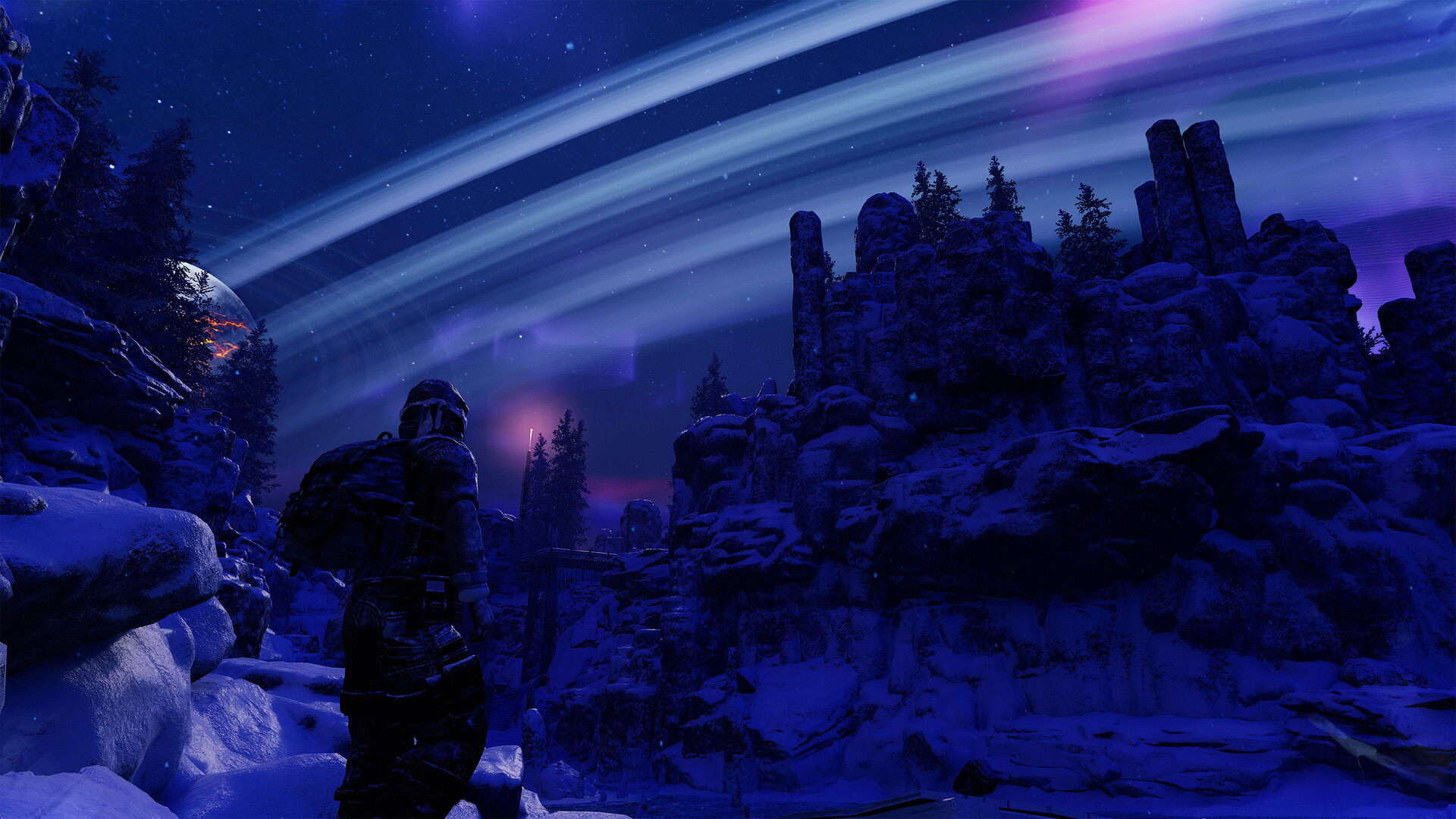
The core survival loop
Every session follows the same rhythm. You leave a warm shelter, gather wood, stone, scrap and food, and come back before your Body Warmth runs out. The trip is shorter than you expect at first, because inventory space fills quickly and the temperature drops fast.
Back at base, you turn materials into better tools, warmer clothing and new building parts. Each upgrade lets you stay outside a little longer or reach a place you could not survive before. That steady widening of your safe radius is the heart of the game.
Weather decides what kind of day it will be. Clear skies are for long expeditions, while storms and fog are for crafting, cooking and resting indoors. A first-impressions piece from Winchester Gaming and Tech put it simply: travel takes planning for both wildlife and cold.
- Check the weather and your warmth, food and rest meters.
- Pick a goal: a quest marker, a blueprint, or a resource you are missing.
- Travel light, gather, and mark a fire spot on the way back.
- Return, craft upgrades, eat and sleep before the next run.
The cold is the real enemy
The publisher describes the game as having no constant gunfire and no fantasy tropes. Instead, cold drains your Body Warmth whenever the area is colder than you, and Hypothermia follows if you ignore it. Frostbite, storms and sub-zero nights turn a simple trip into a risk.
Cold Zones are the sharpest version of this. Large facilities inside them need specific gear, while smaller ones can be raided quickly if you plan your route. Those zones hold the best loot, so the game constantly tempts you to go somewhere slightly too cold.
Fire, insulated clothing, heaters and walls with a roof are your answers. Our stay warm guide covers each one in detail. Early on, a small fire inside a closed shelter does more than any single piece of gear.
Crafting, blueprints and shelters
Crafting avoids heavy menu work and starts with simple hand recipes like the Stone Axe, Pickaxe, Shiv and Bow. Better items need blueprints, which you find around the map or unlock with blueprint points. Workbenches and the Stone Furnace open up metal tools and higher pickaxe tiers.
Building uses tiers that start with wood and move to scrap and metal. Restoring abandoned shelters is just as important as building new ones, because each repaired machine pushes the story forward. Fix Gaming Channel's review advised starting with something small and functional rather than an elaborate base.
The first post-launch update improved building part placement and fixed stutters caused by stairs. Fast travel points were also made easier to spot, which matters once you run a network of shelters. See the crafting guide and base building guide for recipes and tiers.
Hunting, food and combat
Food comes from hunting, traps and cooking rather than endless canned goods. Wolves, boars, elk and a bad-tempered bear roam the wilds, and rival factions hold parts of the map. Combat exists, but it supports survival rather than replacing it.
The bow needs several shots for large animals, while an early rifle can drop an elk in one hit, according to the 30-hour review. Skinning gives meat that you cook at a campfire, and warm meals help against the cold. Story mode makes animals less threatening, while Survival has fewer animals and harsher injuries.
Combat animations are a known weak spot. The official roadmap lists combat animation polish as the headline of Update 1. Our food guide shows the best hunting grounds.
Your dog companion
You pick a dog breed at character creation and rescue the dog early in the story. It can carry items, guard, gather and be told to stay or come. It also warns you when danger is near.
Players disagree on how useful it is right now. One preview said it was mostly extra storage, and the 30-hour review joked that its main job was to hold the junk. Others value the warnings, especially when playing alone.
The dog stays outside in all weather and does not need feeding after you meet it. Some players have asked for more interaction, such as letting the dog inside during snowstorms. Expect the companion to change during Early Access.
Story, Survival and Custom
You choose a background, a specialization and a dog breed before you start. The four specializations are Tracker, Scavenger, Marksman and Engineer, and each raises three skills. Skills such as Crafting, Axes and Skinning also improve as you use them.
| Setting | What changes |
|---|---|
| Story | Easier hunger, rest and damage; focus on exploring and the plot |
| Survival | Scarcer resources, fewer animals, harsher consequences |
| Custom | The host adjusts individual values |
Pick Story for your first run if you want to learn the map and systems. Survival is the intended challenge, and the 30-hour reviewer still called the game hard. Custom lets a group tune the world to its own taste.
Solo or co-op
Permafrost supports single-player and online co-op for up to four players. The studio says co-op does not make the game easier, because the world scales and everyone still has to stay warm. Splitting roles, such as one hunter, one gatherer and one builder, is the real advantage.
The first patch after launch improved the friends-only server list so it shows friends' worlds first. Co-op disconnections and quest blockers were still listed as work in progress. Read the multiplayer guide before hosting, or the solo guide if you prefer to go alone.
What the gameplay feels like in Early Access
Early impressions are broadly positive. Fix Gaming Channel scored it 7 out of 10 and wrote that there is a very good survival game underneath the ice. Steam user reviews sat at Mostly Positive in the first days.
The rough edges are technical. Launch-week hotfixes targeted GPU crashes, a visible terrain seam bothered reviewers, and the sleep system always wakes you the next morning. Some players also reported mouse control issues.
The developers plan to stay in Early Access for at least 12 months. The roadmap adds map content, weapon parts in crafting, a sledgehammer for clearing obstacles and the White Hell biome. Read our review roundup to see whether the current build is right for you.
Built from the Steam store page and Early Access FAQ, official Steam patch notes from launch week, the publisher's press release and hands-on coverage by Fix Gaming Channel and Winchester Gaming and Tech. Systems may change during Early Access. Last updated: October 11, 2026.
Sources
References and further reading for this article.