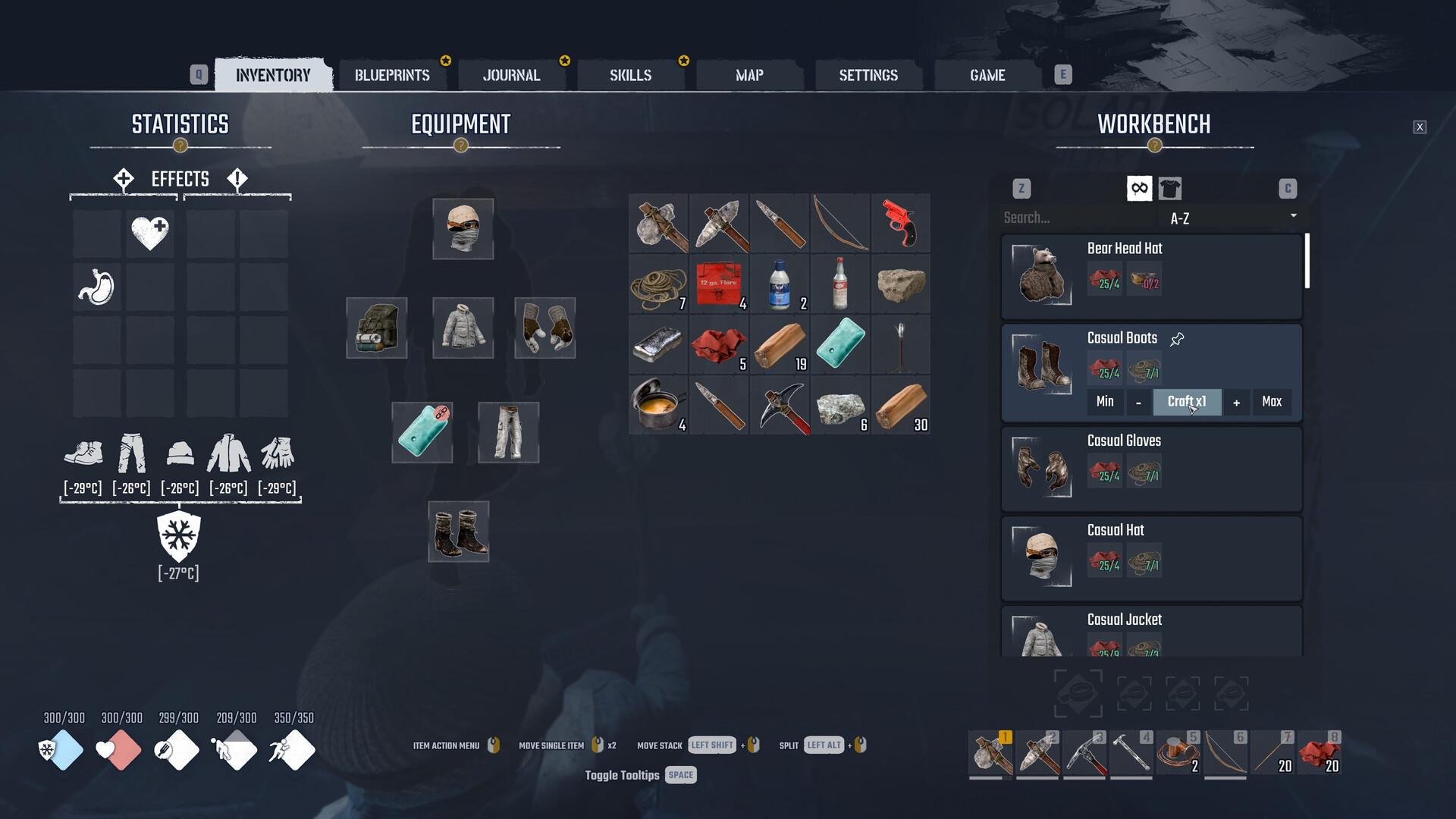
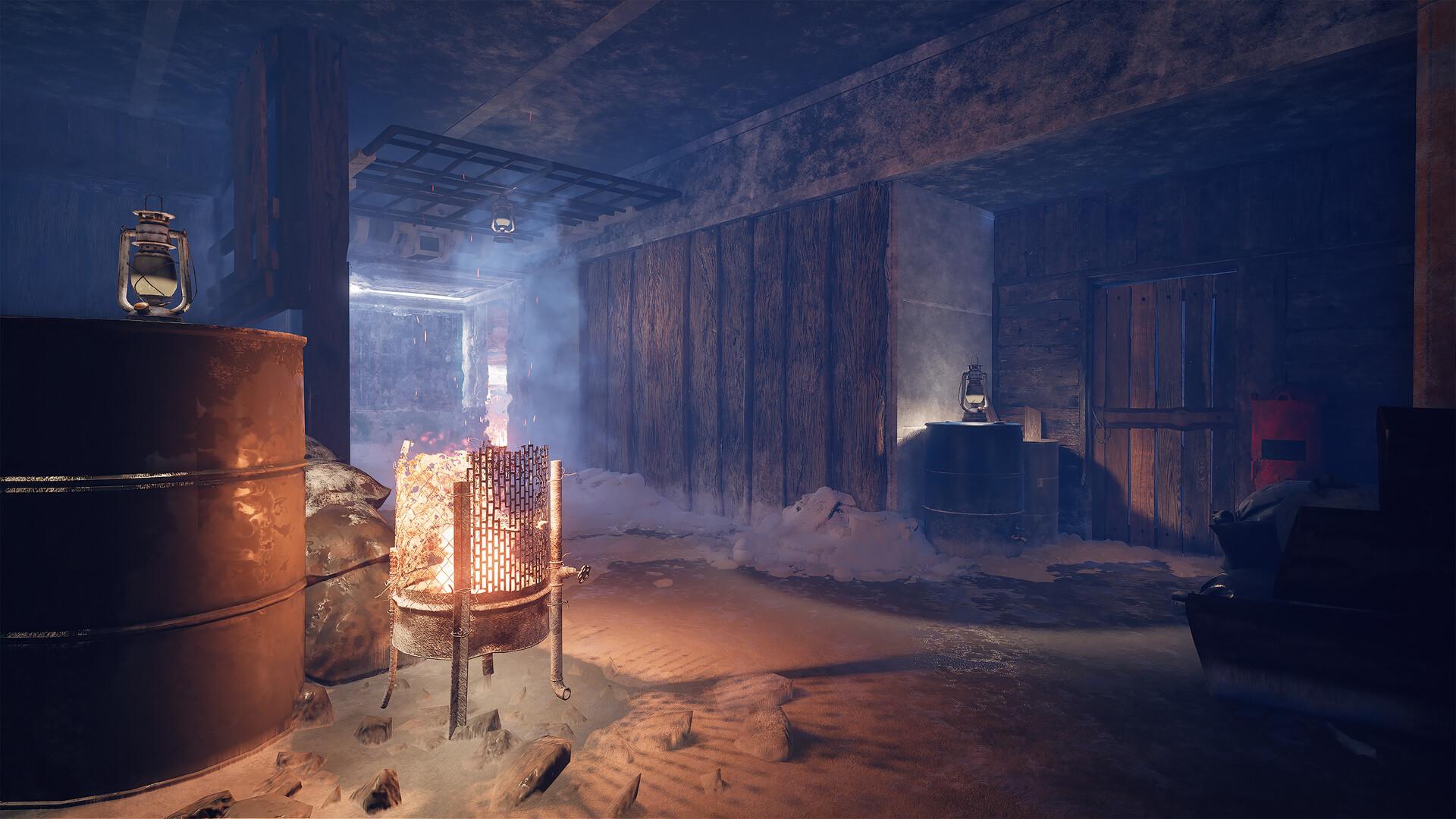
Press B to open build mode and snap pieces together, starting with a foundation, then walls, a door and a roof. Permafrost has three official building tiers, Wood, Scrap and Quality Metal, which differ in durability and in how much heat you keep inside. You can build almost anywhere outside settlements and Cold Zones, or renovate ruined buildings instead. Put your heat source inside walls and a roof, add a claimed bed, and you have a base that keeps you alive.
How build mode works
Building starts with the Building Tool, which you carry from the very beginning. The in-game hint tells you to build a shelter using build mode, which is on B by default. Playtest footage shows a build menu that also opens with the middle mouse button.
Pieces snap together on a grid, so you start with a foundation and add walls, doorways, floors and roofs. A reviewer who played the full build found that structural pieces snap into place with little difficulty. Workstations such as the Workbench need a foundation under them.
One streamer shared a useful habit: place walls on the corners first and fill in from there. Windows and shutters are also available once you unlock them. Finish your shelter before night, because a half-built house still lets the cold in.
The official Steam post on survival calls shelter your first task. It is not only for warmth but also for storing supplies and building a future. Over time you restore structures, reinforce walls, heat your base and expand, and eventually farm food and craft advanced gear.
The three building tiers
The official Steam post on building names three tiers: Wood, Scrap and Quality Metal. The main differences are the durability of the structure and how much heat you receive while inside. That second point matters a lot in a game where the cold is the main threat.
You start with the Wooden set, which is Tier 1, and unlock the others in the blueprint skill tree. Every tier comes in a basic and an advanced version, so you can keep expanding your base. A fan datamine of the preview build lists the wall strength below.
In the same preview data, the Wooden Structures set costs 2 blueprint points to unlock. A wooden foundation costs 5 Wood, a wall 3 Wood and a door 2 Wood. Those prices make a small first room affordable within your first hour.
| Tier | Material | Wall HP (preview data) |
|---|---|---|
| Tier 1 | Wood | 500 |
| Tier 2 | Scrap (Tin) | 750 |
| Tier 3 | Quality Metal (Armored) | 1000 |
Where to find building materials
The official building post explains where each material comes from. Wood is most common around Horizon and the Woods. Scrap starts showing up more often at House Camp and the Solar Fields.
Quality Metal can be found in late-game regions, but you will mostly make it by smelting iron in a smelter. That ties the top building tier to your crafting progress. One streamer noted that a single tree gives a good amount of wood, so early walls are cheap.
Where you can and cannot build
You have a lot of freedom in where you settle. A reviewer summed it up: if you want to build a house in the middle of the woods, you are free to do so. The limits are no-build zones, which are usually around points of interest and settlements.
Cold Zones are also off limits, as the fan map of the preview build confirms. That is one more reason to set up camp just outside dangerous areas and make short trips in. Pick a spot with easy access to wood and stone.
Inside your own base, the game is relaxed about layout. The same reviewer noted that you can place crafting stations very close together to make the most of a small space. A compact room is easier to heat, so this works in your favour.
Renovating ruined buildings
Free building is only one option. In the official developer Q&A, the team explains that you can also renovate existing structures and restore a destroyed building to its former state. The existing shell already blocks the wind, which saves materials.
Renovation has rewards beyond shelter. The developers say that if you renovate certain buildings, people will come to them and traders may appear. Quests also pay you to repair walls, stairs and roofs.
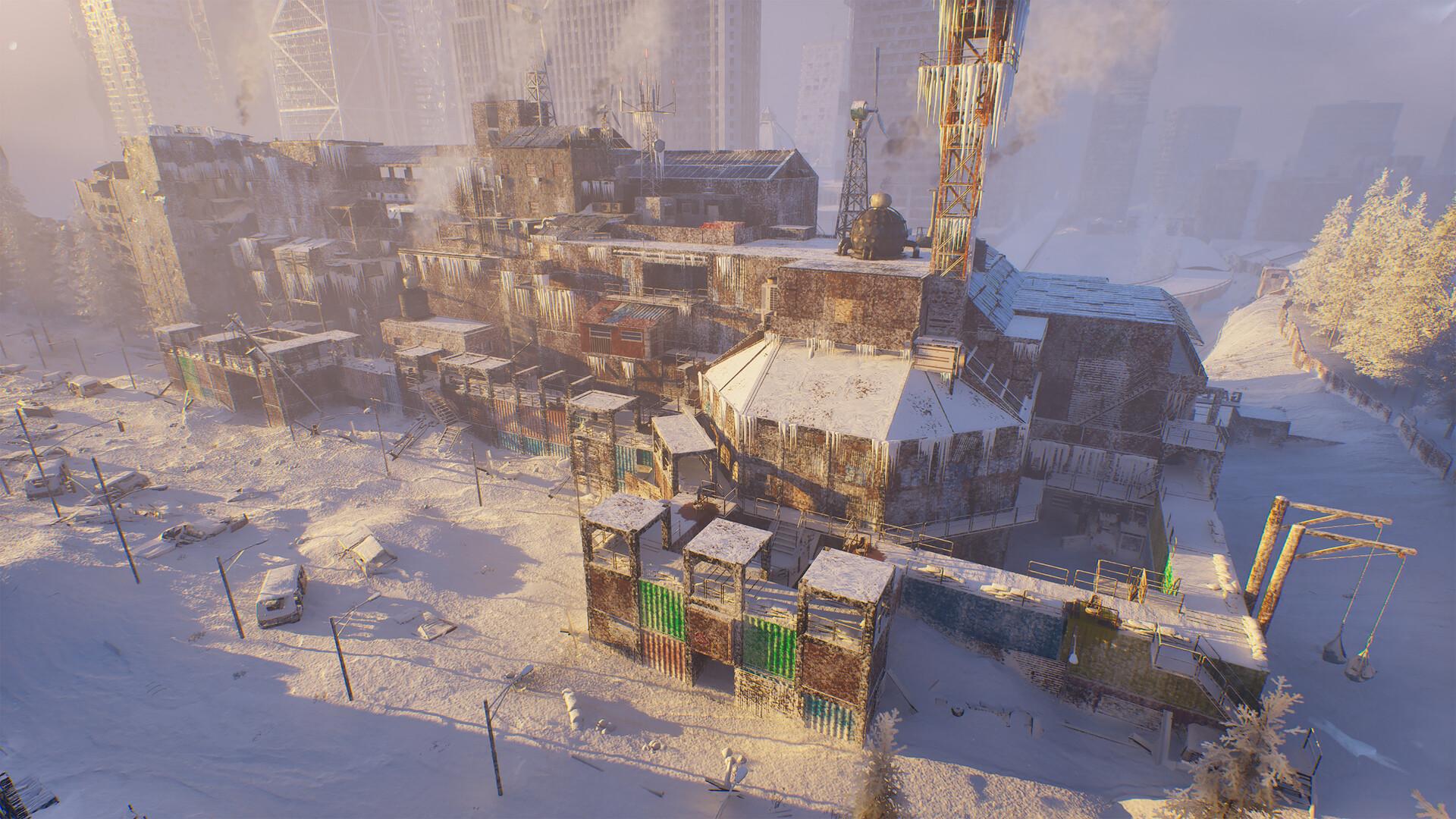
The long-term goal is City Mall, which the developers call the largest location suitable for a base. It sits in the dangerous White Hell biome, and there is potential to electrify it and add defenses. The official roadmap adds the White Hell biome in Update 4.
The store page frames this as building a network of shelters to outlast the cold. Progress is gated by exploration: you restore abandoned shelters, repair broken machines and reclaim technology to push deeper. Each new outpost makes the next trip safer.
Your first base checklist
The quest New Home walks you through your first proper shelter. Aim for a small, closed room you can heat, rather than a large open space. These pieces cover everything you need.
- Workbench for 10 Wood, to unlock better tools.
- Foundation, walls, doorway, door and roof to trap heat.
- Campfire or brazier inside the walls.
- Bed, claimed, to set your home respawn point.
- Storage chest so loot survives a death.
Claimed beds are personal and cannot be used by other players, as the in-game prompt says. Later, you can build a Fast Travel Point at home to link it to the ones you discover. See how to save for how beds and respawns work.
Keeping your base warm
A shelter only helps if it holds heat. Players on the official forum found that a fire inside a room with walls and a roof can push the temperature into positive values. An open campfire at night or in a storm may not be enough.
Higher building tiers keep more heat inside, according to the official post. That makes upgrading walls worthwhile even before you need the extra durability. The stay warm guide covers clothing and heaters for when you leave.
Upkeep, decay and known issues
Structures can decay over time, and preview data shows that repairs cost one unit of the piece's material. After the demo, the developers listed building degradation as something to address, including the idea of making it toggleable. Use a hammer to repair as needed.
Some playtesters ran into placement problems, such as blocked spots and a clunky build menu. The developers fixed a building exclusion zone bug during the October playtest. The roadmap's first update promises more quality-of-life improvements for building.
After the demo, the team also planned to fix the camera when building in small spaces and to make placement more precise. Those goals came from more than 10,000 pieces of player feedback. Expect building to keep improving through Early Access.
Built from the official Steam post on building tiers, the official developer Q&A, Steam posts on survival and the roadmap, and playtest footage from October 2026. Wall HP values come from a fan datamine of preview build 0.44.2. Last updated: October 8, 2026.
Sources
References and further reading for this article.