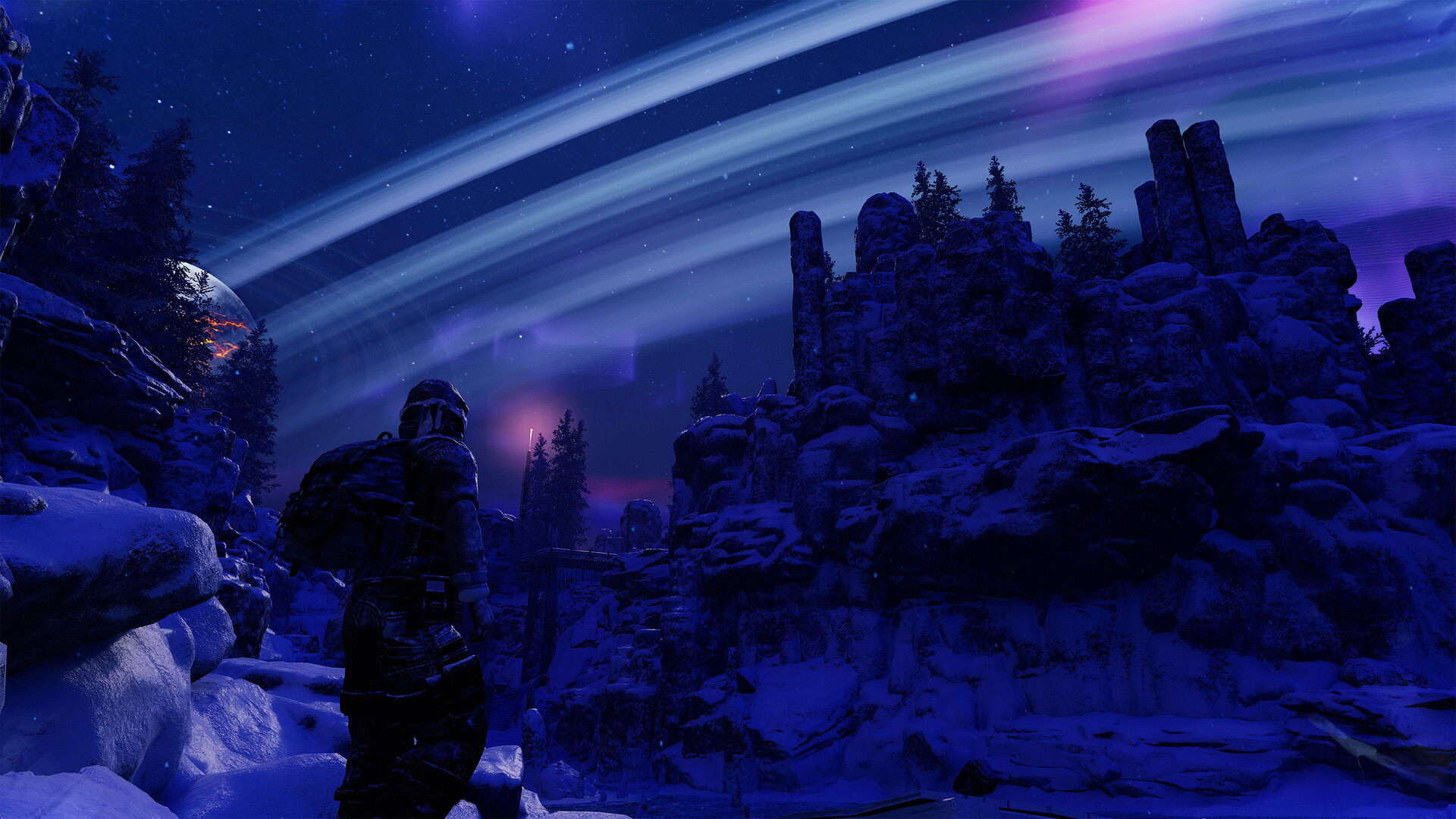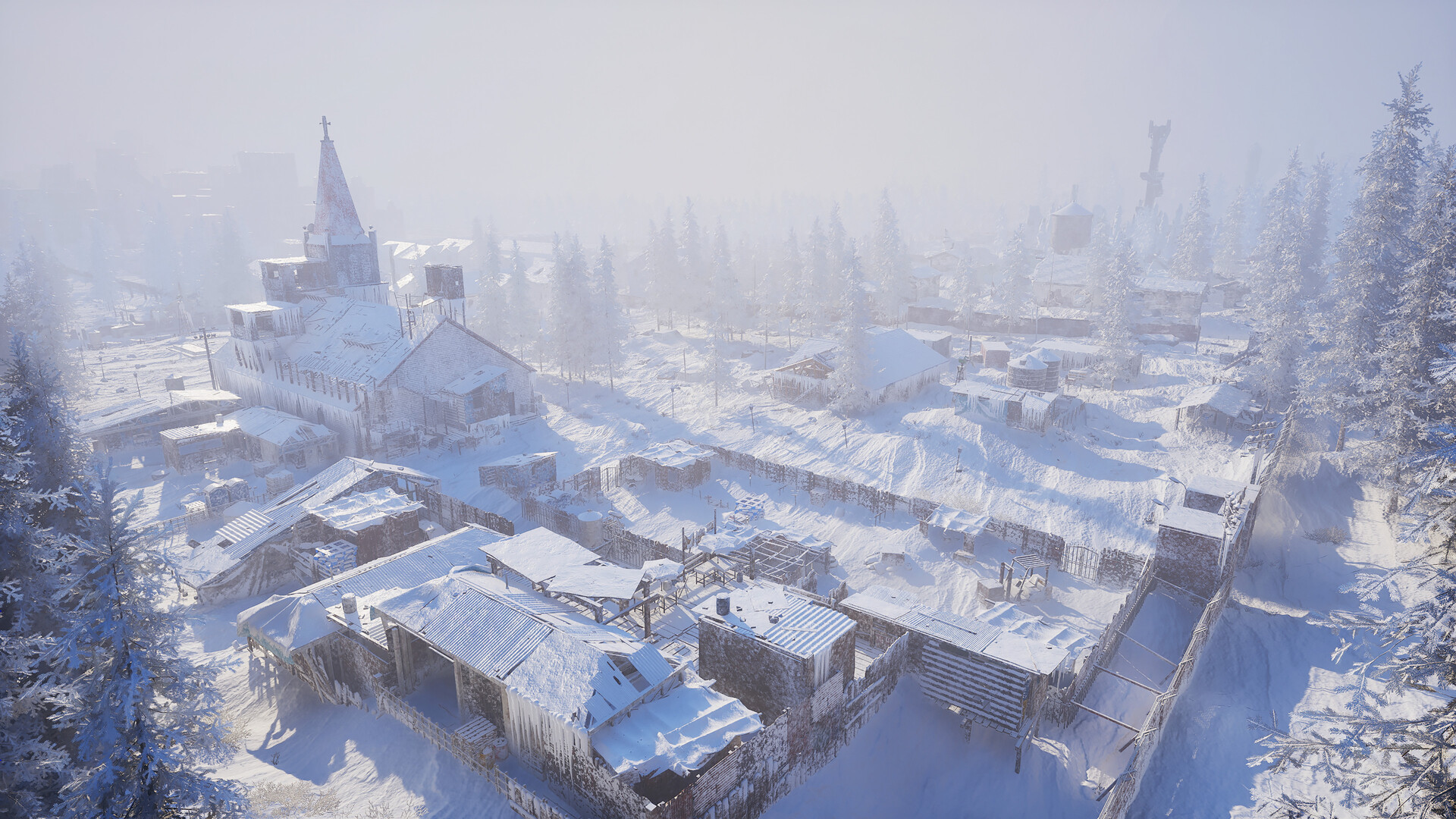
Permafrost is two things. It is a 2026 open-world survival game by SpaceRocket Games, set on an Earth locked in endless winter after the moon shattered, released in Early Access on PC on October 9. It is also a scientific term for ground that stays at or below 0 °C (32 °F) for at least two years in a row. That frozen ground covers about a quarter of the Northern Hemisphere's exposed land, and its thaw is a major climate concern.
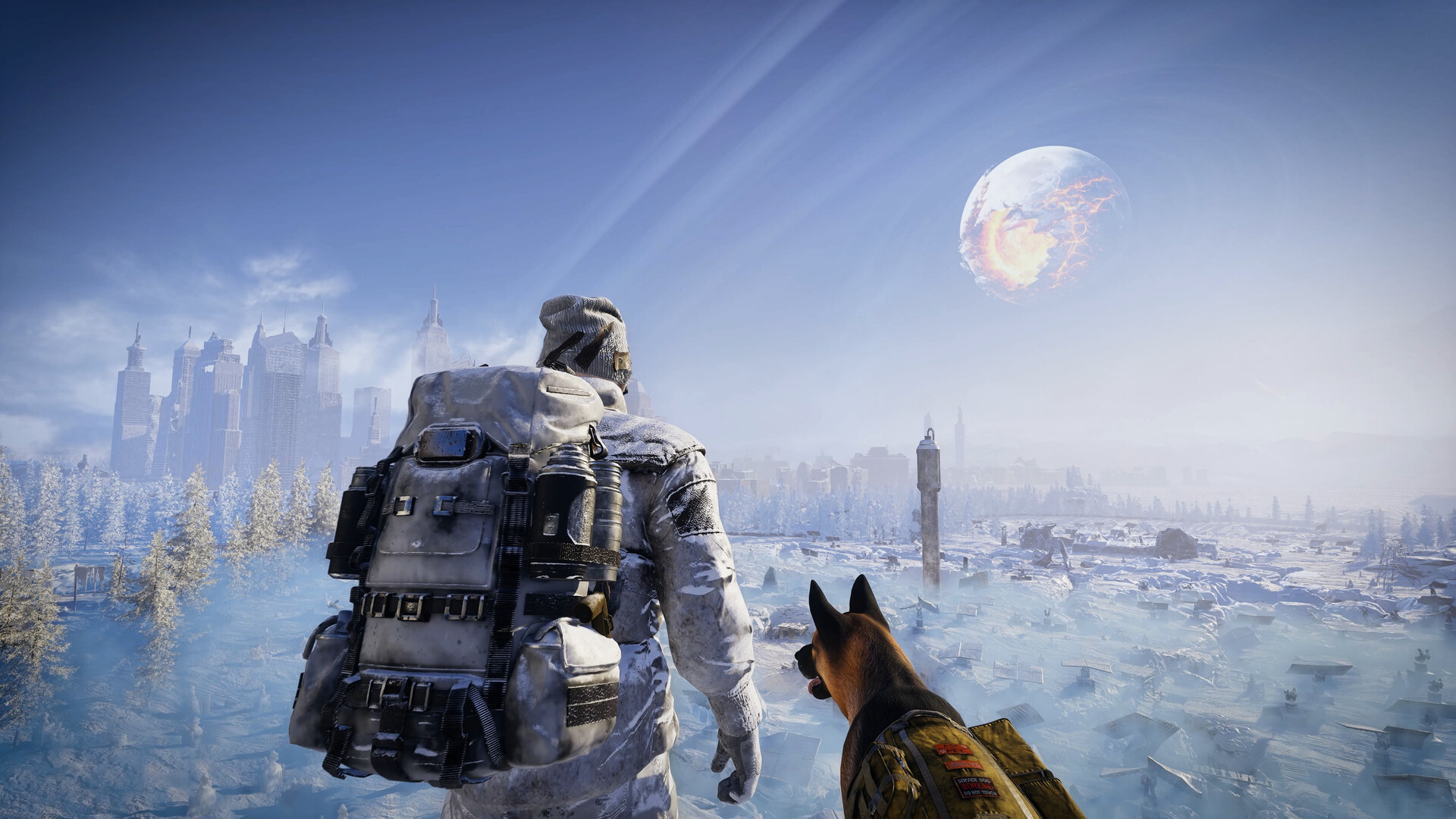
Permafrost, the video game
Permafrost is a story-driven open-world survival sandbox developed by SpaceRocket Games, a team of about 15 people in Poland. Toplitz Productions publishes it, the same company behind the Dynasty series. It entered Early Access on Steam, GOG and the Epic Games Store on October 9, 2026.
The year is 2035, ten years after the moon shattered and its debris ring blocked the sun. You play as Rook, an engineer following a radio signal from a long-lost friend named Icarus. The cold itself is the main enemy, more than any gunfight.
| Fact | Detail |
|---|---|
| Developer | SpaceRocket Games |
| Publisher | Toplitz Productions |
| Release | Early Access, October 9, 2026 |
| Platforms | PC (Steam, GOG, Epic); PS5 page with no date |
| Players | Solo or online co-op for up to 4 |
| Price | $24.99, with a 20% launch discount |
You scavenge, craft, hunt and restore abandoned shelters while a dog companion scouts and carries supplies. Progress comes from exploring colder areas and repairing machines. Our gameplay overview explains the full loop.
Why the game is called Permafrost
The title describes the world itself. After the moon broke apart, winter never ended, so the ground across the map stays frozen year after year. In other words, the whole setting has become permafrost.
That idea shapes every system in the game. Body Warmth, Cold Zones, frostbite and storms are constant threats, and fire is more valuable than ammunition. The name tells you up front that the cold is not a season you can wait out.
Do not confuse it with a different game called PermaFrost that uses its own websites. SpaceRocket's game has no standalone official site, and the Steam store page acts as its home. Our wiki overview lists the official channels.
Permafrost meaning and word origin
The word is a blend of permanent and frost. It was coined in 1943 by Siemon Muller, a geologist with the United States Geological Survey. He needed a short English term for the permanently frozen ground the US Army met while building in Alaska.
In everyday speech, permafrost simply means ground that never thaws. Scientists use a stricter definition based only on temperature. Ice is not even required, because dry soil or rock can count as permafrost too.
What real permafrost is
The National Snow and Ice Data Center defines permafrost as soil, sand, sediment or rock that remains at or below 0 °C (32 °F) for at least two years. The definition depends on temperature alone, not on moisture, snow cover or location. Permafrost can be less than 1 meter thick or more than 1,500 meters deep.
On top of it sits the active layer, the part that thaws each summer and refreezes each winter. The active layer is where plants grow and where most seasonal change happens. Below it, the ground stays frozen all year.
- Permafrost — ground at or below 0 °C for two or more years.
- Active layer — the top layer that thaws and refreezes every year.
- Subsea permafrost — frozen ground under Arctic continental shelves.
- Ground ice — ice held inside permafrost, from tiny crystals to large wedges.
Where permafrost is found
Permafrost covers about 25 percent of the Northern Hemisphere's exposed land, roughly 23 million square kilometers. About 65 percent of it lies in Eurasia and 35 percent in North America and Greenland. Most is found north of 60° latitude in Russia, Canada and Alaska.
It also appears in Mongolia, northeastern China and on the Tibetan Plateau, where altitude keeps the ground cold. Patches exist as far south as the high Himalaya and in parts of Antarctica. Siberia holds some of the deepest and oldest permafrost on Earth.
Scientists sort it into zones by how much of the ground is frozen. Continuous permafrost underlies nearly all of the land, while discontinuous and sporadic zones have frozen patches mixed with thawed ground. Mountain permafrost depends on altitude rather than latitude.
Why permafrost thaw matters
Northern permafrost soils store roughly 1,400 to 1,600 billion tonnes of carbon, about twice as much as the atmosphere holds. As the Arctic warms, thawing soil lets microbes break that material down. They release carbon dioxide and methane, which add to warming in a feedback loop.
Thaw also damages the ground itself. Roads, pipelines and buildings in the Arctic can sag or crack as ice-rich soil softens. Coastlines erode faster, and some lakes appear while others drain away.
You may also have seen headlines about a permafrost zombie virus. In 2022, researchers reported reviving ancient giant viruses from Siberian permafrost, one of them about 48,500 years old. Those viruses infect amoebas, not people, but the work raised questions about what thaw could release.
How scientists track permafrost
Researchers drill boreholes and lower temperature sensors deep into the ground. Long records from these holes show that permafrost is warming at a global scale. The International Permafrost Association coordinates much of this monitoring.
They also measure the active layer each summer at hundreds of sites. A thicker active layer means more soil thaws every year. Satellites and aircraft add maps of ground sinking, lake changes and coastal erosion.
Together these records feed climate models and engineering plans for Arctic towns. They also help predict how much carbon could escape as the ground warms. Agencies such as NSIDC and NASA publish many of the results for the public.
How the game borrows from the science
The game exaggerates the real thing, but some ideas carry over. Frozen ground, deep snow and brutal storms limit where you can travel and build. Caves and underground areas give shelter from the surface cold, just as real ground stays more stable below the active layer.
Real permafrost formed over thousands of years, while the game's frozen world appears within a decade. That is fiction, not climate science. The game is about surviving a sudden endless winter, not about today's warming Arctic.
Where to go next
If you came for the game, start with the beginner guide and the map guide. Thinking about buying it? Read our review roundup and the price page first.
If you came for the science, NSIDC and NASA explain permafrost in much more depth. Their pages cover monitoring, maps and the latest research on thaw. We link the main sources below.
Game facts come from the Steam store page and publisher press materials. The scientific definition, coverage and thickness figures come from the National Snow and Ice Data Center; carbon estimates and the 2022 virus study are widely reported by NASA and major outlets. Last updated: October 11, 2026.
Sources
References and further reading for this article.